
Flight One Aircraft Training
CASA.141FTO.0129 AOC TAAOC.0707

GA Readiness Short Course (Cessna 210)

THIS PROGRAMME INCLUDES

GA Readiness Course

Industry-focused post-CPL training for pilots seeking practical experience in aircraft commonly used by general aviation operators.

Move beyond the training fleet. Build experience employers can use.

Build practical experience in the Cessna 210 – a capable, higher-performance single-engine aircraft with an established role in Australian general aviation. This course helps newly qualified and developing commercial pilots progress beyond the conventional training fleet and prepare for the aircraft, operating environments and expectations they may encounter in their first flying roles.

Flight One developed the programme in direct response to feedback from general aviation employers. Operators consistently tell us that emerging pilots may hold a CPL and the required total flight time, yet still lack meaningful exposure to the larger piston singles used in regional, charter, freight and utility operations. The Cessna 210 GA Readiness Course is designed to close that practical gap with structured, fully dual training and an included competency assessment.

This Programme Includes
Cessna 210 dual flight training | Briefing and theory | Competency assessment


Who is this Course Suitable for?

This course is designed for CPL graduates and motivated pilot job seekers who want to strengthen their aeronautical experience, operational readiness, and pilot resume.

Fleet Info

Flight One operates a modern, highly maintained training fleet of Cessna 172s (with and without Glass Cockpit), Cessna 210, Twin-engine Piper Seminoles, and parachute-equipped Cirrus SR20 & 22s. Explore the Fleet →

Study Mode & Attendance

P.O.A.

Intakes

Flexible

Duration

3 Weeks

Delivery Locations

Archerfield Airport (Brisbane)
  • Domestic fees
Self-Paced
Please enquire for current rates
This course is configured to individual needs. Please contact us for details using the contact form, or call 07 3123 7800.
JUMP TO FULL COURSE DETAILS

Qualification Overview

About The Course

The step from a CPL training environment into general aviation employment is significant. Flight schools rightly focus on the competencies and aeronautical experience required for the commercial pilot licence. Employers, however, also need pilots who can adapt those foundations to larger, more capable aircraft, real operating constraints and commercial decision-making.

The Cessna 210 GA Readiness Course provides supervised experience in aircraft systems, performance planning, higher-weight operations, normal and abnormal procedures, navigation and operational decision-making. Every flight hour is dual, allowing the instructor to develop, observe and assess the pilot throughout the programme.
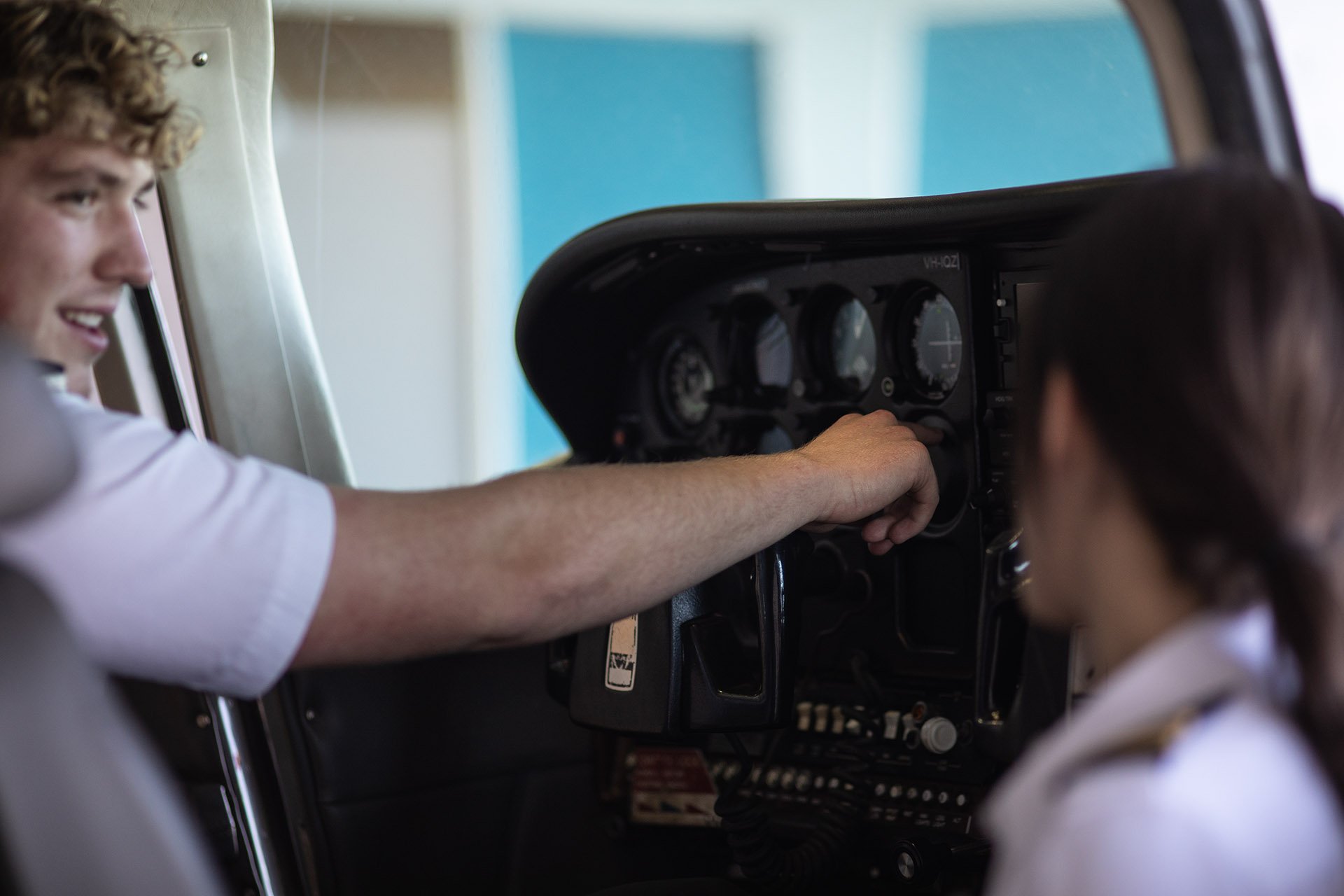
Cessna 210 instruction

Why the Cessna 210?

Cessna 206 and 210 aircraft are commonly encountered in general aviation, particularly in regional and utility operations. The Cessna 210 represents a meaningful step beyond the aircraft normally used for ab-initio and CPL training, while remaining within the single-engine aeroplane class rating. It exposes pilots to more demanding systems management, loading, performance and operating considerations in a practical training environment.

For a job seeker, this is not simply another hour-building exercise. It is structured exposure to the kind of aircraft employers have told Flight One they need new pilots to understand. The principal 10-hour programme also provides a substantial block of recent Cessna 210 dual experience that can be clearly presented to prospective employers.

Why ten hours?

Flight One has received direct industry feedback that 10 hours of relevant Cessna 210 experience can be an important threshold when operators and their insurers consider an emerging pilot. Requirements vary between operators, aircraft and insurance policies, so completion cannot guarantee insurance acceptance or employment.

Who is this course suitable for?

This course is designed for CPL graduates and motivated pilot job seekers who want to strengthen their operational readiness and aviation CV. It is particularly relevant to pilots pursuing entry-level roles with regional general aviation operators, including businesses that use Cessna 206 or Cessna 210 aircraft.

Training is conducted in the Cessna 210. The experience is relevant preparation for the broader Cessna 200-series operating environment, but it does not by itself establish competency in a Cessna 206 or replace an employer’s aircraft-specific induction, checking or insurance requirements.

Contact Information

Quick enquiry? Give us a call on 07 3123 7300.

Submit Enquiry
Looking to get started? Applying is easy. Apply

Meet your Instructors

Course Details

Course Details

Course at a glance

Study mode
Instructor-led dual flight training, briefing and theory.
Intakes
By arrangement, subject to aircraft and instructor availability.
Indicative duration
Approximately two weeks full-time equivalent for the 10-hour programme.
Training location
Archerfield Airport, Brisbane.
Main programme
10 hours of dual flight training plus 4.5 hours of briefing and theory.
Shorter option
Approximately four hours of dual flight training plus the required briefing and theory.

Course details

Course Cessna 210 GA Readiness Course
Course type Non-award, self-funded flight training
Training provider Flight One (Flight Two Pty Ltd t/a Flight One | CASA.141FTO.0129 | ABN 12 137 904 771)
Training aircraft Cessna 210
Training location Archerfield Airport, Brisbane
Delivery mode Instructor-led dual flight training, briefing and theory
Main programme 10 hours of dual flight training plus 4.5 hours of briefing and theory
Shorter option Approximately four hours of dual flight training plus appropriate briefing and theory
Indicative duration Approximately two weeks full-time equivalent for the 10-hour programme
Assessment Competency assessment included in both options
Minimum experience Successful completion of the final CPL flight test or a current CPL, with a minimum of 200 hours total flight time
Regulatory alignment CASR 61.385 and applicable Part 61 MOS single-engine aeroplane class-rating competencies
Course fee Please contact us for current fees.
Fee inclusions Aircraft hire, fuel, cleaning, airport movements, instructor time, scheduled briefing and theory, and competency assessment
VET Student Loans Not available. This is a non-award, self-funded course.
International students This is not a CRICOS course and is not available as a principal course for Student Visa purposes. Other visa holders may enquire, subject to their visa conditions and Flight One approval.

Choose the level of experience you need

The 10-hour GA Readiness Programme is the recommended option for CPL graduates and active job seekers. A shorter General Competency Option is available for pilots whose principal objective is aircraft familiarisation and assessment against the applicable competency standard.

Feature 10-hour GA Readiness Programme 4-hour General Competency Option
Best suited to CPL graduates and motivated job seekers seeking stronger GA employment readiness Experienced pilots seeking a shorter aircraft-familiarisation and competency pathway
Dual flight training 10 hours Approximately four hours
Briefing and theory 4.5 hours in addition to flight time Appropriate briefing and theory for the pilot’s experience and training needs
Assessment Competency assessment included Competency assessment included
Primary value Broader operational exposure and a meaningful block of recent Cessna 210 experience Focused training and assessment against the applicable competency requirements
Indicative duration Approximately two weeks full-time equivalent Scheduled by arrangement and progressed to demonstrated competency
Course fee Please contact us for current fees. Please contact us for current fees.
Competency governs completion:
CASR 61.385 and the Part 61 MOS do not prescribe a universal four-hour or ten-hour conversion minimum. A pilot must demonstrate the applicable standard. If further training is required, Flight One will discuss the recommended training with the pilot before it is undertaken.

What the training covers

Training is tailored to the pilot’s prior experience and may include:

Cessna 210 general knowledge, systems and operating limitations
Cockpit familiarisation and correct use of navigation and operating systems
Pre-flight planning, inspection, post-flight actions and aircraft care
Fuel planning and management
Weight and balance, loading and higher-weight operating considerations
Aircraft performance calculations, including take-off and landing performance
Normal take-offs, circuits, approaches and landings
Retractable-undercarriage and manual propeller pitch control procedures
Normal, abnormal and emergency procedures
General handling and aircraft familiarisation
Navigation exercises reflecting realistic charter-style operating scenarios
Threat and error management, situational awareness and operational decision-making
A practical competency assessment conducted by an appropriately authorised Flight One instructor

Built around the Part 61 competency standard

Holding a pilot licence and a single-engine aeroplane class rating does not remove a pilot’s obligation to be competent in the particular aircraft they intend to operate. CASR 61.385 requires a licence holder to be competent to the applicable Part 61 Manual of Standards requirements, including:

  • operating the aircraft’s navigation and operating systems
  • conducting normal, abnormal and emergency flight procedures
  • applying operating limitations
  • applying weight and balance requirements
  • using aircraft performance data, including take-off and landing performance data

This course applies those requirements within the Cessna 210 training environment. Training and assessment draw on the single-engine aeroplane class-rating competencies identified in Part 61 MOS Schedule 1, Appendix L.1, with the relevant standards set out in Schedule 2. Applicable units include C2, C4, NTS1, NTS2 and A1–A6, covering pre- and post-flight procedures, fuel management, non-technical skills, ground operations, take-off, normal flight, landing, advanced manoeuvres and abnormal situations.

The Cessna 210 also incorporates design features requiring the appropriate endorsements: retractable undercarriage (MOS unit DFE2) and manual propeller pitch control (MOS unit DFE3). Applicants must already hold the endorsements required for the aircraft unless Flight One confirms that relevant endorsement training and assessment will form part of their individual training plan.

Important:
This is non-award competency and employment-readiness training. It is not a Cessna 210 type rating, an Australian Qualifications Framework qualification, or a guarantee of employment, aircraft access or insurance approval.

Entry Criteria

Entry criteria

Applicants must:

  • have successfully completed the final Commercial Pilot Licence flight test or hold a current Commercial Pilot Licence – Aeroplane
  • have a minimum of 200 hours total flight time
  • hold the licence, single-engine aeroplane class-rating privileges, medical certification and recency required for the proposed training
  • hold the applicable aircraft design-feature endorsements, or have an agreed Flight One training plan for any endorsement still required
  • provide a current pilot logbook and relevant licensing records for Flight One’s review
  • be assessed by Flight One as suitable for the programme, taking account of experience, recency and training objectives

FAQ

Frequently asked questions

Is this a Cessna 210 type rating?

No. The Cessna 210 is operated under the applicable single-engine aeroplane class rating. This course provides aircraft-specific training, experience and competency assessment; it is not represented as a type rating or AQF qualification.

What is the difference between the two options?

The 10-hour programme is the principal employment-readiness course and provides a larger block of recent dual Cessna 210 experience. The shorter option focuses on the training and assessment needed for an appropriately experienced pilot to demonstrate the applicable competency standard.

Does completing 10 hours guarantee that I can be insured?

No. Ten hours may assist where an operator or insurer expects relevant time in the Cessna 210, but every operator and policy applies its own requirements. Completion does not guarantee insurance approval.

Will this make me competent to fly a Cessna 206?

Training is conducted and assessed in the Cessna 210. The experience is relevant to employers operating Cessna 206 and 210 aircraft, but separate Cessna 206 familiarisation, operator training or competency assessment may still be required.

What if I need more than the scheduled hours?

Competency is based on demonstrated performance, not hours alone. If further training is recommended, Flight One will discuss the additional training and charges before it is undertaken.

Are the advertised fees all inclusive?

Yes. The published package fee includes scheduled aircraft hire, fuel, cleaning, movement charges, instructor time, briefing/theory and competency assessment.

How to Apply

How to apply

Call 07 3123 7300

Ready to build experience employers value? Give us a call during office hours and speak with the Flight One team about the 10-hour Cessna 210 GA Readiness Programme (or the shorter General Competency option).

Applying is straightforward:

  • Submit an enquiry and select the Cessna 210 GA Readiness Course.
  • Provide your licence details, final CPL flight-test evidence (if applicable), current logbook totals and relevant endorsements.
  • Speak with the Flight One training team about your employment goals, aircraft experience and preferred programme option.
  • Complete Flight One’s suitability review and agree your quote and training schedule.


Enquire Apply Now

Why Study with ?

Flight One is Committed to Educating the World's Best Aviation Professionals.

Delivering Safe Skies for 40+ Yrs

Our safety culture is the single fundamental value driving every business in our group – the way we run charter operations, maintain aircraft, facilitate travel, and train our students. Because of this “safety first, safety always” philosophy, Flight One ultimately crafts better pilots, engineers and managers.

Part of a Large Aviation Group

Because Flight One offers the full stack of aviation services including charter, aircraft maintenance, industry services and lounge & ground services, our pilot and engineer trainees receive a thorough understanding of how industry really works; plus, they get to meet and chat with the people who make things happen.

Respected by Industry

Flight One graduates are sought out by industry because they meet employers’ needs and expectations. Industry members consistently select our graduates because they know we genuinely care about producing safety-culture oriented, highly skilled aviation professionals.

Flight One Australia Pty Ltd* ABN 73 010 428 805
t/a Flight One School of Aviation
RTO 31285 | CRICOS 01302M

Flight One Education Pty Ltd ABN 77 616 020 485
t/a Flight One School of Engineering
RTO 45165 | CASA.MTO.0048

*RTO Notice: Use of the VET Student Loans Scheme (optional) for VSL approved courses offered by Flight One Australia Pty Ltd [RTO 31285] are subject to eligibility and creates a debt that must be repaid to the Commonwealth. Training is delivered in conjunction with third party providers, Flight Two Pty Ltd t/a Flight One (CASA.141 FTO.0129 | ABN 12 137 904 771) and (CPL-H) V2 Helicopters Flight Training Pty Ltd (CASA.141 FTO.0234 | ABN 47 634 551 563). VSL is not offered for courses provided by Flight One Education Pty Ltd [RTO 45165]